Cobalt-loaded clouds
About it
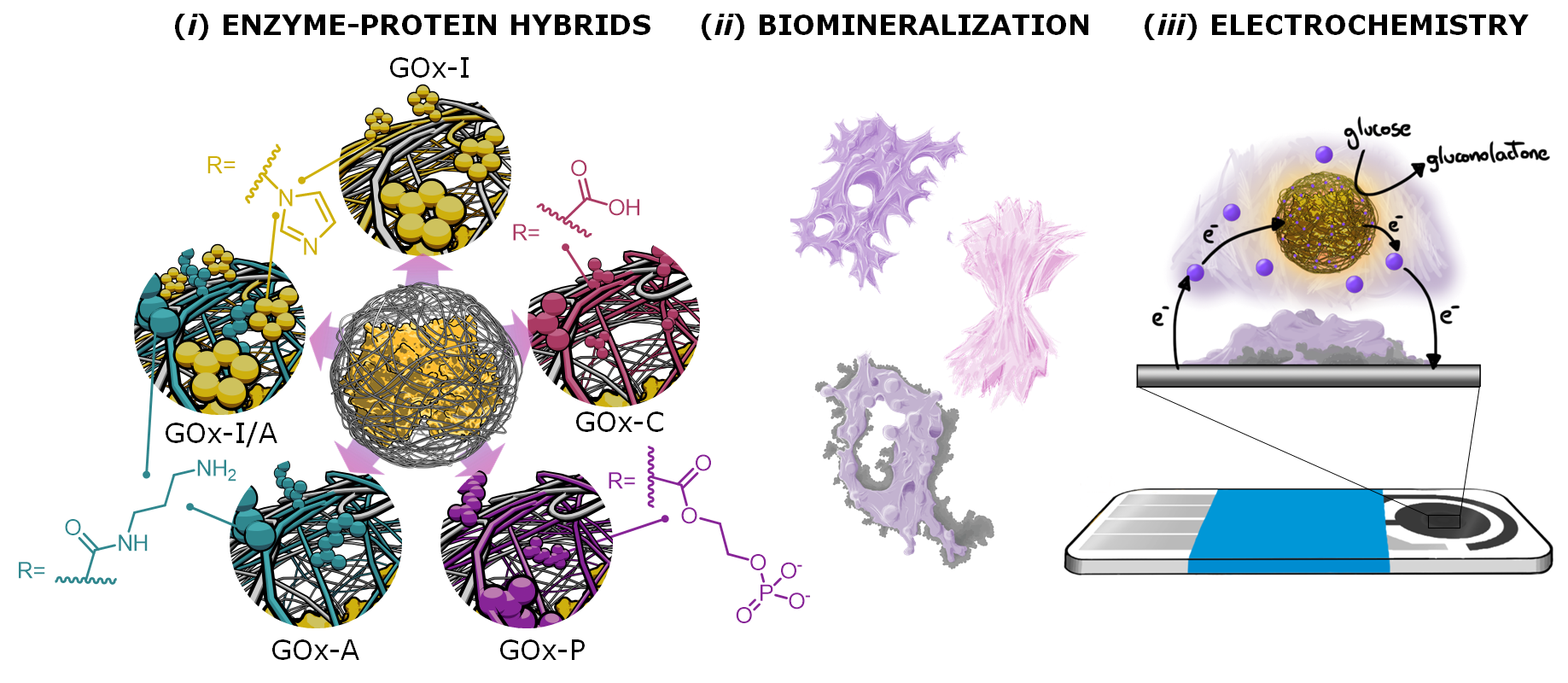
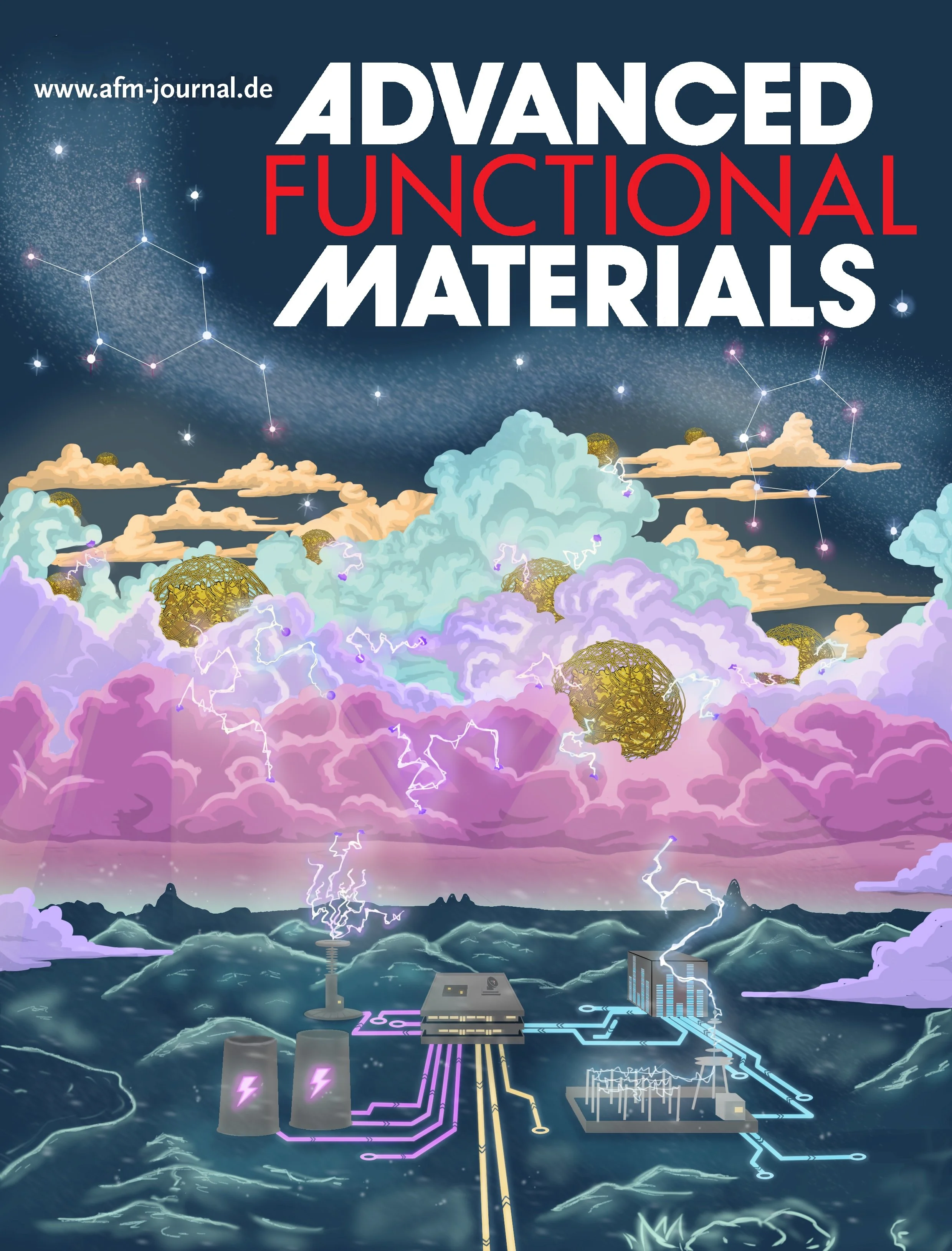
Dr Andoni Rodriguez-Abetxuko and the collective efforts of the research group led by Prof.Ana Beloqui have successfully engineered cobalt-loaded protein biohybrids that show excellent catalytic performance and are easily deposited on the surface of carbon electrodes. The obtained Bioelectrodes can sense glucose without the external addition of redox mediators due to the cobalt-driven electron shuttling between the enzyme and the electrode. The result was featured on the Frontispiece in Advanced Functional Materials: Volume 34, Issue 18
Roles: Conceptualisation, Illustration
Client: POLYMAT & Euskal Herriko Unibertsitatea
Tools: Photoshop
The Challenge
This project was conceived as a visually unified system from the start; every figure inside the paper was designed to share the same style, so the publication would read as a cohesive piece (as shown in the images above). The cover had to feel like a natural extension of that language, while condensing the electrochemical processes into a single, self-contained scene.
The Process
We went with an old-school comic style and expanded the composition into landscape format to give the scene room to breathe. The electrode became an energy plant, firing electricity into the sky through a Tesla coil, backed by a network of transformers and data-analysis units. Nearby, the chipset and CPU were reimagined as a building where workers channel the electrical output — a visual shorthand for information flow. The gel materials took the form of vibrant clouds laced with cobalt atoms, acting as lightning carriers in a direct analogy to ion transfer within real storm clouds. Floating between them, the protein–polymer biohybrids appear as luminous objects — somewhere between suns and small UFOs — radiating light across the scene. Finally, the glucose-to-gluconolactone conversion was laid out as a constellation, with atoms colour-coded and connected by a Milky Way–like trail that captures the motion and progression of the reaction.