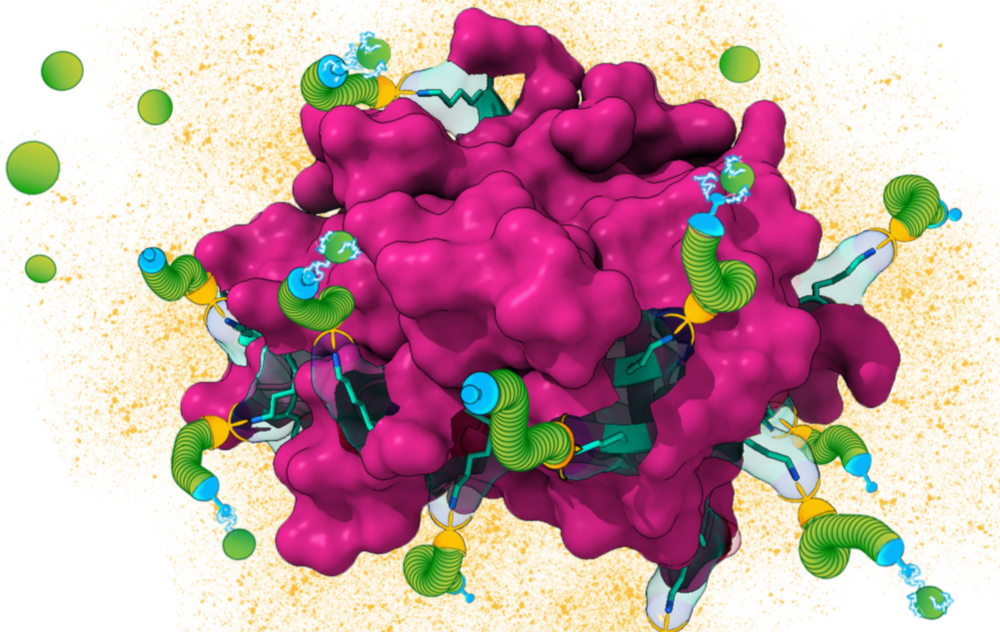
Solid-phase synthesis of enzyme-polymer hybrid materials
About it
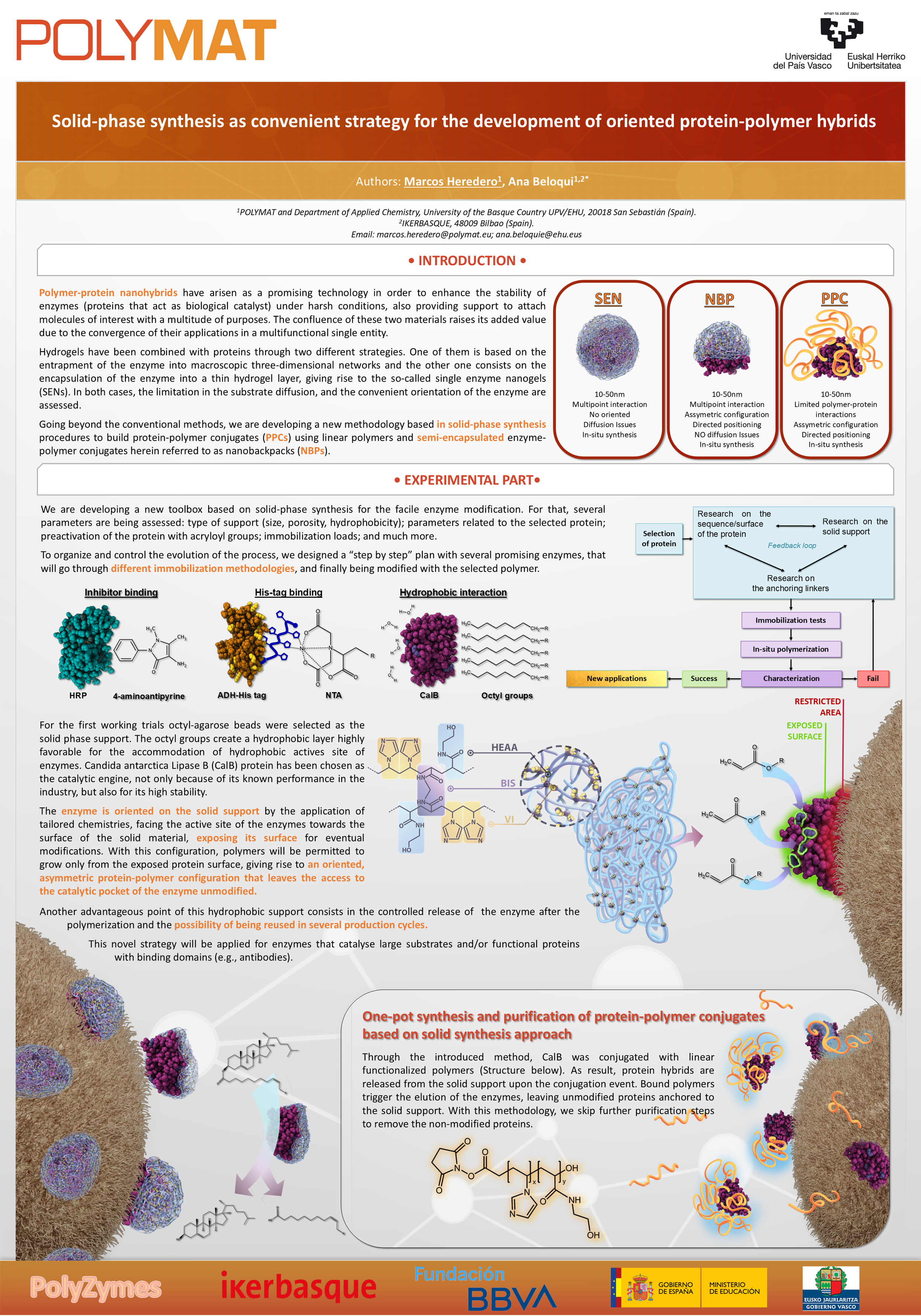
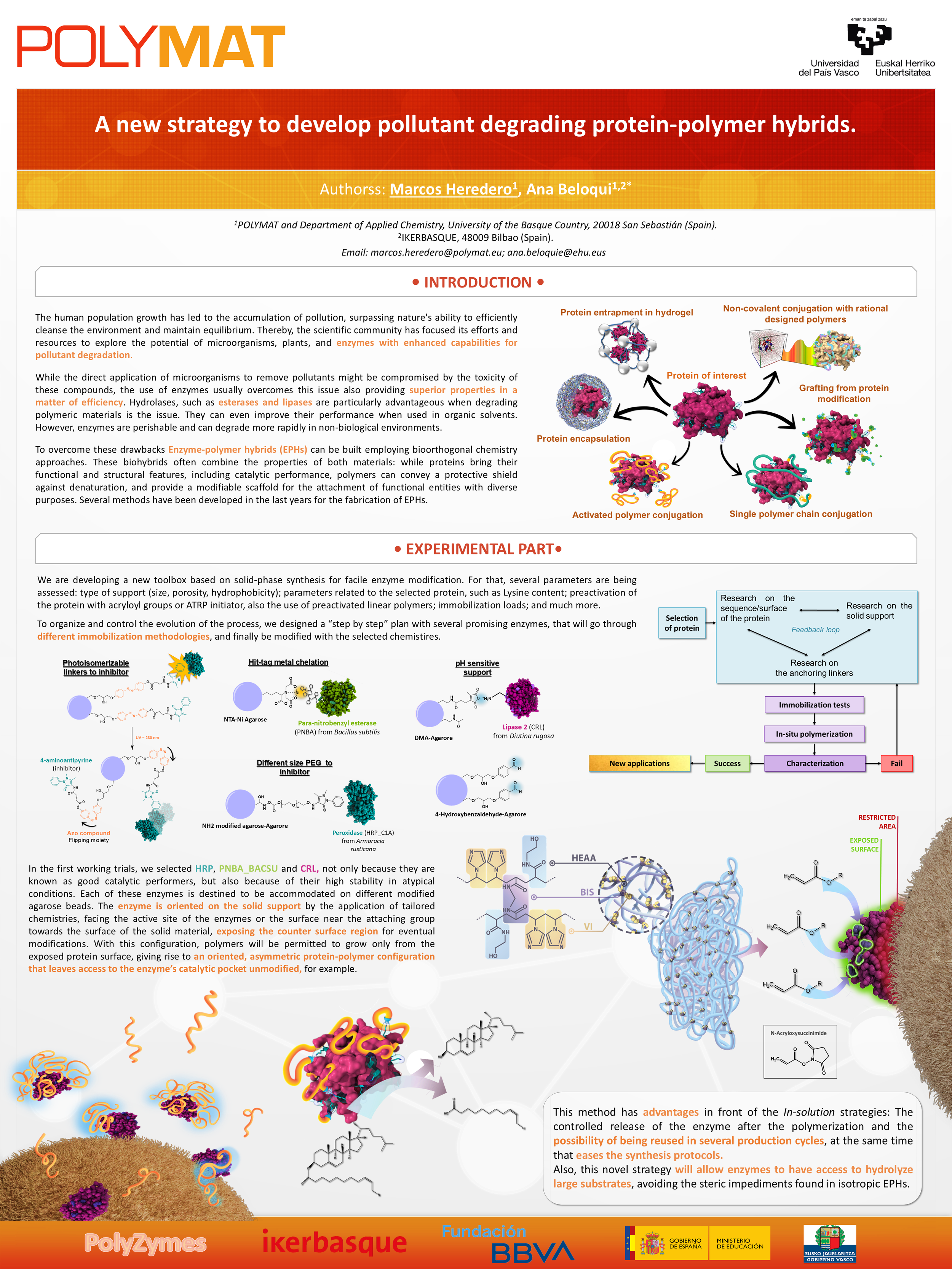
At the early stages of my PhD, the thesis project was focused on the development of asymmetrically modified enzyme–polymer hybrids. The core idea was to take advantage of solid-phase supports, such as agarose beads, to immobilise enzymes in controlled orientations. This approach allowed selective modification of the enzyme region farthest from the support (the back of the protein) while keeping the catalytic site untouched. In doing so, enzymatic activity could be preserved while improving resistance to denaturation, ultimately enhancing catalyst efficiency and stability.
Since we had more ideas than results, the posters presented at these congresses aimed to showcase our perspectives. They captured the exploratory phase of the thesis, presenting several strategies and design hypotheses that were being tested at the time. In this sense, the posters reflected the real, iterative nature of early doctoral research.
The Journey Behind the Poster Design
From the design perspective, we consciously moved away from the classic, highly compartmentalised poster format. Rather than strict grids and rigid sections, we opted for a more organic, interwoven layout, where figures could cross boundaries, occupy space freely, and guide the reader’s eye through the story.
Illustrations were given a leading role. Instead of behaving politely in the margins, they were allowed to invade the poster, dominate certain areas, and act as visual hooks.
The goal was simple: to make the poster noticeable from afar and inviting up close, turning it into a conversation starter rather than a silent wall of data.
Impact and Outcomes
This playful visual strategy proved especially effective in busy congress halls. The excersise of a combination of clear scientific concepts and expressive visual language resulted in the Best Poster Award at the congress on more than one occasion.
Beyond the awards, the most valuable outcome was the human factor. Many interactions started with researchers who were not directly working in enzyme–polymer systems but were curious about the visuals and the underlying ideas.
These unexpected conversations opened the door to new laboratory connections and later collaborations. In that sense, the posters achieved their main objective: not only to present a thesis project in progress, but to make it visible, approachable, and memorable.