ZION: development of polyzwitterionic polymer electrolytes for solid-state battery applications
About it
ZION is an MSCA research project developing polyzwitterionic polymer electrolytes for solid-state batteries. The work exploits the unique combination of overall charge neutrality and large dipole moments in zwitterionic architectures to improve lithium-ion transport, enhance electrolyte–electrode interfacial stability, and introduce mechanically robust, adaptive polymer networks suitable for long-term battery operation.
Roles: Conceptualisation, Illustration
Client: POLYMAT
Tools: Photoshop
The Challenge
The project needed both a graphical abstract and a visual identity, and they had to feel connected like two outputs from the same visual logic. The core difficulty was making the electrolyte the protagonist: in most battery imagery, the casing dominates, but the real innovation here lives inside, at the polymer level.
The Process
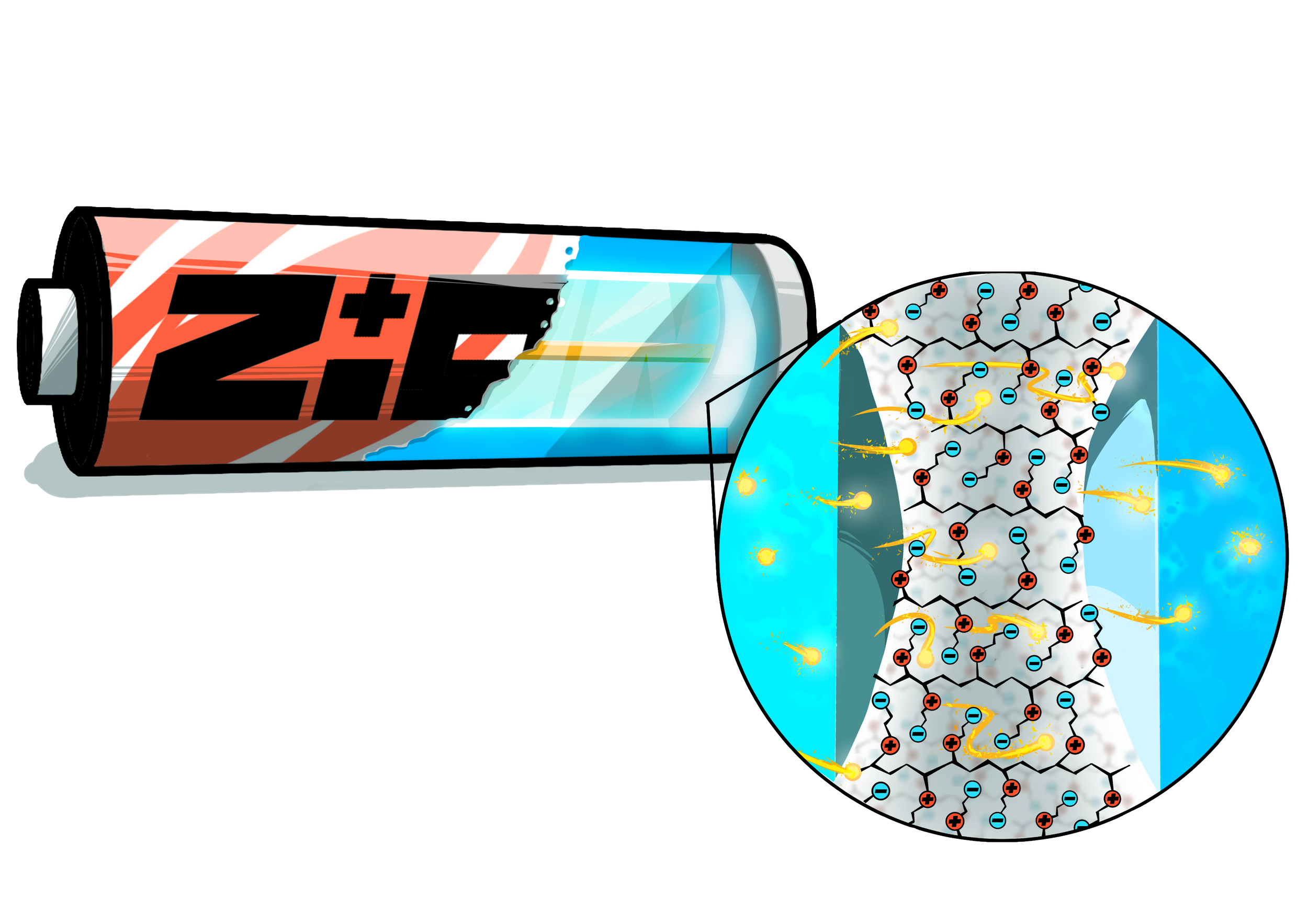
The graphical abstract was designed as a dissection of an old-school graffiti battery, cut open to reveal a glowing electrolyte at its centre, the component the project is built around. A magnified view of the membrane sits alongside it, zooming into the polymer structure to communicate the underlying science at the material level.
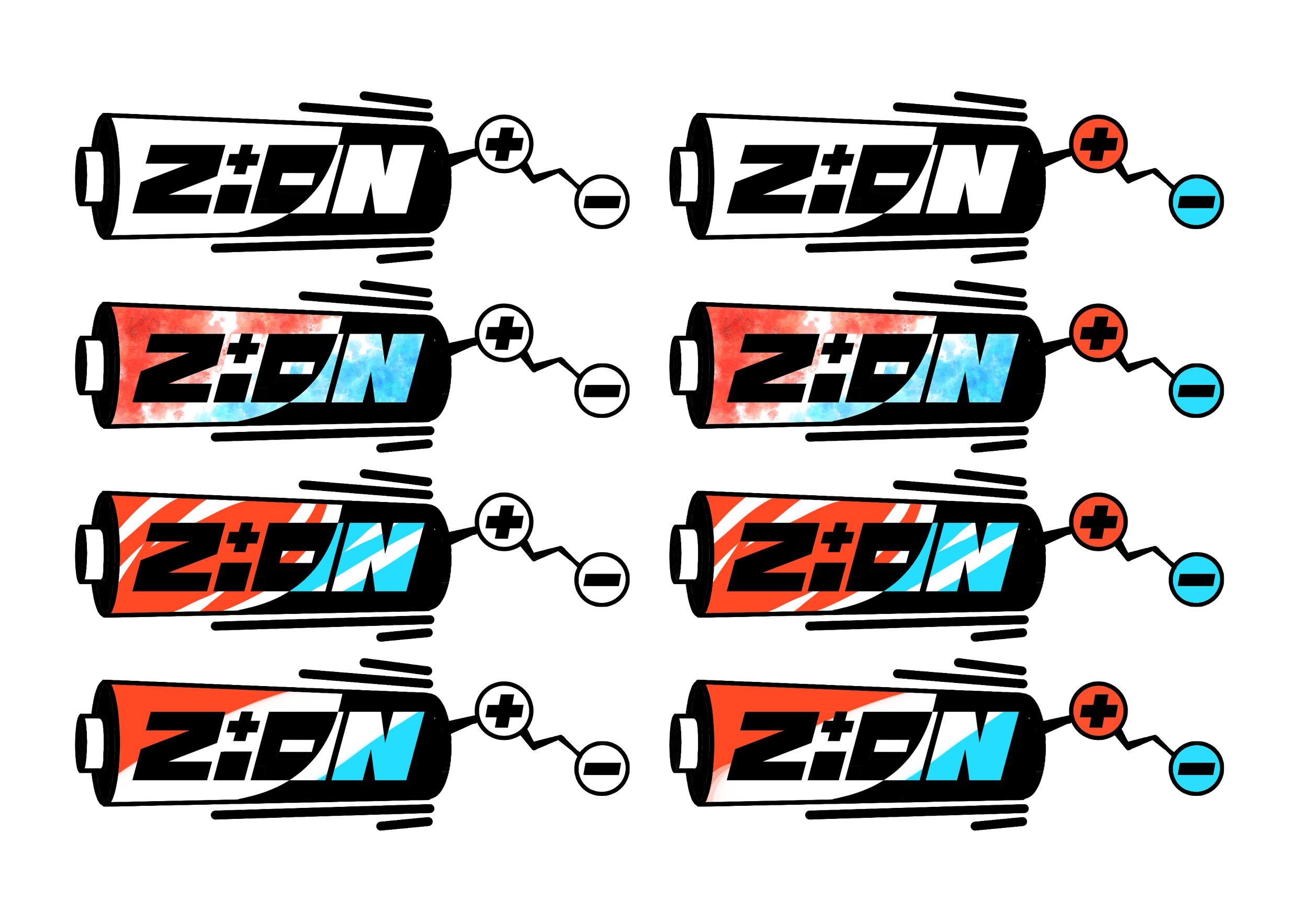
The logo grows directly from that same image. It adopts the battery silhouette from the graphical abstract, stripped down to its essential form for recognisability and versatility. The project was named ZION, derived from zwitterionic. It is integrated into the design, while a tail extending from the battery depicts a simplified zwitterionic polymer chain. That playful detail reinforces the central idea: what defines the system isn't the casing itself, but the chemistry engineered inside it, quietly doing the heavy lifting between anode and cathode. Together, the graphical abstract and logo form a coherent visual system that ties project identity directly to the polymer chemistry.